One of the biggest reasons people delay freelancing is because they believe they need experience before they can start.
The problem is obvious:
How do you get experience if nobody hires you first?
This is where many beginners get stuck.
They spend months:
- Watching tutorials
- Taking courses
- Researching platforms
- Planning endlessly
without actually building anything.
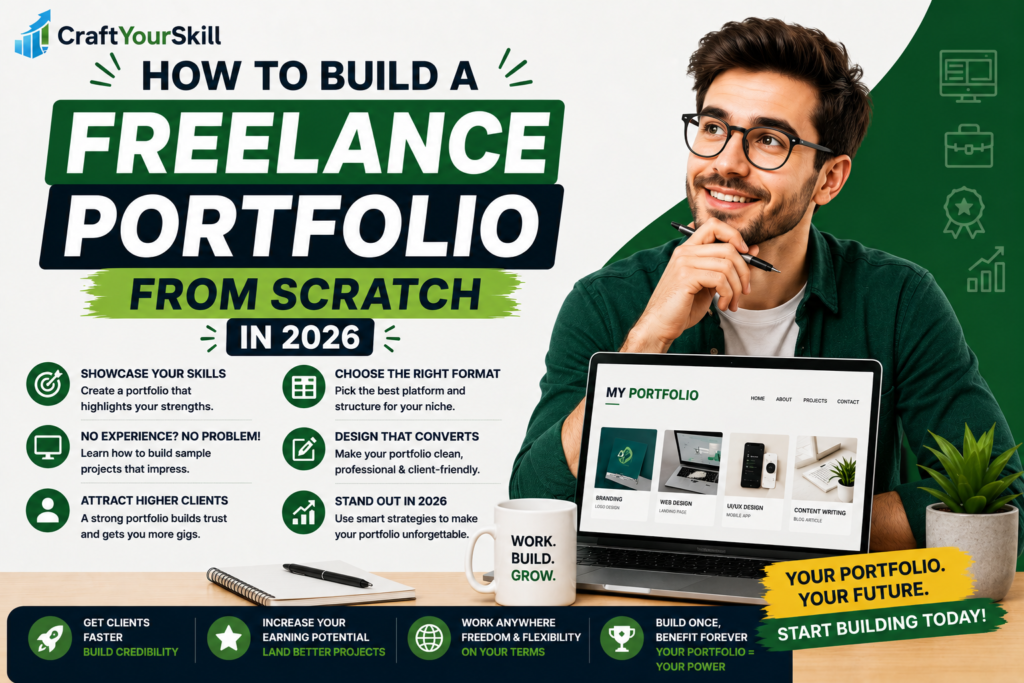
The truth is, most beginner freelancers do not need years of experience to create a portfolio. What they need is proof that they can solve a problem or complete a task professionally.
A portfolio is not simply a collection of paid work.
It is a demonstration of capability.
And in 2026, there are more ways than ever to build one from scratch even if you have never worked with a client before.
This guide focuses on practical ways beginners can realistically create a freelance portfolio that helps them start getting opportunities online.
What Clients Actually Look for in a Portfolio
Many beginners imagine clients carefully analyzing every detail of a portfolio.
In reality, most clients are looking for something much simpler:
- Can this person do the work?
- Does their style fit what I need?
- Do they look professional and reliable?
Clients are usually not expecting perfection from beginners.
They are looking for clarity and confidence.
A small portfolio with:
- Clean presentation
- Relevant examples
- Good communication
often performs better than a large but disorganized one.
The Biggest Beginner Mistake
The most common mistake is waiting for “real clients” before building portfolio pieces.
That approach delays progress unnecessarily.
You can create portfolio samples yourself.
In fact, many successful freelancers started by creating:
- Mock projects
- Practice designs
- Sample articles
- Fake brand concepts
- Demo websites
Clients care more about what they can see than whether a project was originally paid.
Step 1: Choose One Specific Skill
Before building a portfolio, you need clarity.
Many beginners try to showcase:
- Writing
- Design
- Video editing
- Social media
- SEO
- Virtual assistance
all at once.
This weakens positioning. Instead, start with one clear service.
For example:
- Blog writing
- Canva design
- Social media management
- Video editing
- Virtual assistant services
Focused portfolios almost always perform better for beginners.
Step 2: Create Sample Projects
This is where your portfolio actually begins.
You do not need permission to create examples.
If you want to become a freelance writer, write sample blog articles.
If you want to offer social media design, create example Instagram posts.
If you want to edit videos, produce sample short-form content.
The goal is demonstrating ability.
Example Portfolio Ideas by Skill
Writers
Create:
- Blog articles
- Product descriptions
- Website copy
- Email newsletters
Choose realistic topics businesses would actually need.
Canva Designers
Using Canva, create:
- Instagram carousels
- Pinterest pins
- Presentation slides
- YouTube thumbnails
Try designing for fictional brands or industries.
Video Editors
Using tools like CapCut, create:
- TikTok edits
- Reels
- Short YouTube clips
- Subtitle examples
Short-form content is especially useful because demand continues growing.
Virtual Assistants
Create examples of:
- Organized spreadsheets
- Email templates
- Scheduling systems
- Research documents
Even organization itself can become portfolio material.
Step 3: Make Your Portfolio Look Professional
Presentation matters more than many beginners realize.
A portfolio does not need to be complicated.
But it should feel:
- Clean
- Organized
- Easy to understand
You can build a simple portfolio using:
- Your own website
- Google Drive folders
- Notion pages
- PDF presentations
In the beginning, simplicity is completely fine.
What to Include in Each Portfolio Piece
For each example:
- Show the work clearly
- Add a short explanation
- Mention the goal or purpose
For example:
“This Instagram carousel was designed for a fictional fitness coach focused on beginner workouts.”
This helps clients understand your thinking process.
Step 4: Build Portfolio Pieces Around Real Businesses
One very effective strategy is redesigning or improving existing businesses as practice.
For example:
- Rewrite a restaurant’s social captions
- Redesign a local brand’s Instagram post
- Improve a website homepage layout
- Create a better product description
Do not claim you officially worked for those businesses.
Simply label them as concept or practice projects.
This approach makes your portfolio feel much more realistic.
Step 5: Focus on Quality Over Quantity
Beginners often believe they need:
- 30 portfolio pieces
- Large websites
- Complex case studies
You do not.
A small portfolio with:
- 4–6 strong examples
- Clear presentation
- Relevant work
is usually enough to start applying for beginner opportunities.
Poor-quality filler pieces often hurt more than help.
Step 6: Create a Personal Brand Around Your Work
Even simple branding helps.
This includes:
- Consistent fonts
- Clean visuals
- Professional profile photo
- Simple bio
- Clear niche positioning
Your goal is not looking like a giant agency.
Your goal is looking reliable.
Where Beginners Should Host Their Portfolio
You do not need an expensive website immediately.
Good beginner-friendly options include:
Personal Website
This is the strongest long-term option.
A simple WordPress website already creates professionalism and credibility.
Notion
Using Notion, many freelancers build clean, minimalist portfolio pages quickly.
Behance
Useful mainly for:
- Designers
- Visual creators
- Branding portfolios
Google Drive
Simple but effective for beginners sharing work samples directly with clients.
How to Make Your Portfolio Look More Experienced
This is one of the smartest beginner strategies:
focus on outcomes instead of experience.
Instead of saying:
“I am new”
show:
- Clean work
- Good communication
- Professional structure
Confidence in presentation matters.
Many clients cannot tell whether a portfolio project was paid or self-created unless you explicitly mention it.
Should Beginners Work for Free to Build a Portfolio?
Sometimes but carefully. Free work can make sense if:
- You are building initial experience
- The project improves your portfolio
- The client is legitimate
- You gain testimonials
But avoid getting trapped doing endless unpaid work. A few strategic projects are enough.
The Importance of Testimonials
Even one or two testimonials can improve credibility dramatically.
You can get testimonials from:
- Small projects
- Volunteer work
- Friends
- Local businesses
- Early freelance clients
Social proof matters.
Portfolio Mistakes Beginners Should Avoid
Including Too Many Random Services
Focused positioning is stronger.
Copying Other Portfolios Completely
Inspiration is fine.
Copying weakens authenticity.
Making Everything Overly Complicated
Clients want clarity, not confusion.
Waiting Too Long Before Starting
Perfectionism delays progress more than lack of experience.
Conclusion
A freelance portfolio is not something you “unlock” after years of experience.
It is something you build while learning.
The freelancers who grow fastest are usually the ones willing to:
- Create practice work
- Improve publicly
- Learn through action
rather than endlessly preparing.
In 2026, clients care far more about visible proof of skill than perfect resumes.
And that creates enormous opportunities for beginners willing to start before they feel fully ready.